
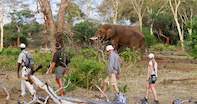
Bushman Wilderness TrailThe Bushman Trail lies in the south-western section of the Kruger National Park, in a secluded valley near the Berg-en-Dal rest camp. Attractions include the landscape, which is characterised by many awe-inspiring granite hills, which provide splendid vantage points in the surrounding bush. A major feature of the Bushman Trail are the Bushman paintings which can be viewed in many of the hill shelters. White rhino, elephant and buffalo are some of the animals prevalent in the area on wilderness trails in the Kruger National Park. The trail departs at Berg-en-Dal camp. Metsi-Metsi Wilderness TrailMetsi-Metsi means 'water water' in Sotho. The Trail camp is located 6 km from the Mozambique border on the eastern aspect of N'wamuriwa mountain and is nestled at the foot of the mountain and overlooks a small waterhole. A nearby safari hide provides the ideal place for viewing many of the bird and mammal species found in the area. The landscape varies from undulating savannah to rocky gorges and ravines. The Nwaswitsontso River Attracts an abundance of wildlife during the dry winter months, especially Elephant, Black Rhino and large predators. The trail departs at Skukuza camp. Napi Wilderness TrailThe Napi Wilderness Trail is situated midway between Skukuza and Pretoriuskop in picturesque woodland bushveld, the trail camp of the Napi Trail lies nestled in luxuriant riverine bush at the confluence of the Napi and Biyamiti streams. The Napi wilderness is characterised by undulating terrain, granite hills and a high resident population of White Rhino. Black Rhino, Elephant, Lion and Buffalo also frequent the Kruger Park area. On your wilderness trails, you will see that the birdlife is prolific. Nyalaland Wilderness TrailThe Nyalaland Trail winds through one of the prime wilderness areas of southern Africa. The trail camp is situated on the bank of the Madzaringwe Stream north of Punda Maria, near the Luvuvhu River. The magnificent Lanner Gorge and other vantage points offer splendid views of the South African bushveld on wilderness trails in Kruger National Park. The Kruger Park is known for its fever tree and boabab forests, prolific birdlife and spectacular views. The beauty of this wild area more than makes up for its lack of big game. Another interesting feature of the trail is the recently discovered fossil sites. Olifants Wilderness TrailThe trail camp for the Olifants Wilderness Trail in the Kruger National Park is situated on the southern bank of the Olifants River, west of the Olifants / Letaba confluence. It offers a magnificent view of a beautiful stretch of this perennial river which ultimately flows through Mozambique and into the sea. The landscape varies from riverine bush and gorges to the foothills of the Lebombos. It supports a variety of wildlife, including large predators, Elephant and Buffalo. The Olifants River is home to Crocodile, Hippo and many bird species. The call of the African Fish Eagle is almost synonymous with this trail and the Rare Pels Fishing Owl can sometimes be seen along the riverine vegetation. Sweni Wilderness TrailConjure up a picture of Africa at its wildest: herds of Zebra and Wildebeest and tall, stately Giraffe scattered across sun-drenched grass plains; the pungent smell of Buffalo in one's nostrils, the heart-stopping sight of an enormous Elephant bull feeding in a thick stand of Lala palms only metres away... The trail camp of the Sweni Wilderness Trail in the Kruger National Park, which overlooks the Sweni Stream in the wilderness area near Nwanetsi provides a view of the surrounding marula and knobthorn savannah, within Kruger National Park. The area is home to the Sweni Lion pride. Black and White Rhino have also been sighted in the area. Wolhuter Wilderness Trail - White Rhino CountryAs the name implies the Wolhuter Wilderness Trails in Kruger National Park commemorates the legendary father and son rangers, Harry and Henry Wolhuter, who for many years patrolled the southern section of the Kruger National Park. The trail camp is situated midway between the Berg-en-Dal and Pretoriuskop restcamps in the southern section of the park - the heart of White Rhino country. TAKE NOTEA maximum of eight persons between the ages of 12 and 60 years may participate per trail. To derive the optimum benefit and enjoyment from wilderness trails in the Kruger National Park, it is recommended that a group comprises persons of a similar age, with common interests and the same level of fitness. A reasonable level of fitness is required as up to 20km (12.4 miles) may be walked per day. The distance is covered at a leisurely pace, however, to afford trailists an intimate encounter with the wilderness. Due to the terrain covered and the safety factor, handicapped persons should not participate in these wilderness trails. All participants have to complete an indemnity form before embarking on the Wilderness Trails in the Kruger National Park. Minors must be in possession of a form signed by a parent or legal guardian. These forms should be handed to the trail ranger before departing on the Wilderness Trails in the Kruger National Park. The general rules and regulations of the Kruger National Park also apply to trailists. Trailists depend on the trail ranger for their safety and for guidance. The trail ranger should therefore be obeyed at all times. Failure to co-operate in this respect could lead to the immediate cancellation of the trail. For safety and ethical reasons liquor may be consumed at the trail camp only. Excessive consumption of liquor is strongly discouraged. Trailists provide their own liquor and soft drinks. Limited space is available in a communal refrigerator. MALARIA PROPHYLACTICS ARE ESSENTIAL. PLEASE REFER TO INFO ON THIS SITE AND DO CONSULT YOUR CHEMIST.ClothingClothing should be comfortable and durable. Neutral colours such as khaki are preferable. Light-coloured garments such as whites and creams should be avoided. T-shirts are not recommended as they provide little protection against the sun on the neck. A hat and an all-weather jacket should be taken along. A tracksuit, either woollen or lightweight depending on the season, is a useful garment. Footwear should be worn-in prior to the trail, have thick soles and provide good ankle support. It is preferable not to wear white shoes. DurationThe duration of the wilderness trails is three nights and two days, either from Sunday to Wednesday, or from Wednesday to Saturday. Trailists meet at the designated restcamp at 3.30pm on Sundays and Wednesdays from where they leave by vehicle for their trail camp after a short briefing. HintsA camera, binoculars, sunscreen lotion and reference books are optional. A powerful torch is essential. Due to the constant inflation rate prices are subject to change without any prior notice. |
