
About the South West
At Malelane Gate
Malelane Skukuza via Afsaal
Malelane Skukuza via Biyamiti
Malelane to Berg-en-Dal
Malelane to Crocodile Bridge
Matjulu Loop
Numbi Gate
Numbi Gate to Skukuza
Pretoriuskop Area
Pretoriuskop to Malelane
See a map of South West Kruger Park
At that time, Pretoriuskop was the only overnight facility for tourists in the Park. Two years later, when the initial road network had been established, a few more camps were built and it was possible to travel as far as Olifants River, 850 cars entered Kruger. Although this is minuscule compared to the annual visitor figures of more than 1 million people, the authorities at the time were taken aback by Kruger's popularity.
The Park's first warden, Colonel James Stevenson-Hamilton, recalls that there was not sufficient tourist accommodation to cater for the demand, and that rangers frequently had to surrender their own quarters to tourists and sleep outside.
He quotes one ranger remarking: "I did not mind so much their using my soap, towels, plates, knives and forks, but I do wish they had not used my toothbrush."
In the Numbi and Pretoriuskop Area

Animals
Sable antelope
Lichtenstein's hartebeest
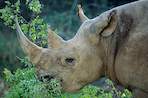
Black rhino
Kudu
Leopard
Birds
Brown-headed parrot
African cuckoo hawk
Arrow-marked babbler
Gorgeous bush-shrike
Crested barbet
Numbi Gate Routes and Roads

- Albasini Road to Phabeni Crossroads (S3) 17km (45 minutes); dust road, scenic drive through kiaat terminalia woodlands with good lowveld views;
- Napi Road to Skukuza (H1-1) 54km, (2,5 hours) tar road; descends from foothills into low, rolling hills of mixed woodland; excellent birding route; game more regularly seen from Napi Boulders;
- Drives around Pretoriuskop (variable distances, 1 to 2 hours); dust road; beautiful granite koppies in mixed woodlands; kudu and white rhino; interesting birding;
- Voortrekker Road to Afsaal (H2-2) 44km; (2 hours); dust road; historic transport route descending from foothills into sweet thornveld and mixed woodlands; usually good for a variety of game.

Numbi Gate is one of the most dramatic entrances to the Kruger Park because its higher altitude gives one a sweeping vista over the lowveld to the east and the granite foothills to the north and south. The contrast between the densely populated rural communities outside the Park and the pristine wilderness inside is also striking.
The entrance gate gets its name from the Siswati word for the small fruit of the Transvaal milkplum (Englerophytum magalismontanum). The milkplum, which has a sweetish taste and is high in Vitamin C, was used by the Voortrekkers to make a form of brandy known as mampoer.
In traditional African medicine, ground milkplum bark is used to treat rheumatism.

Like the Malelane / Berg-en-Dal area, the Numbi foothills enjoy some of the highest rainfall in the Park and, therefore, have a high diversity of plant and animal species.
However, the vegetation, which is defined as Pretoriuskop sourveld, is thick and game is not easily spotted.
The terrain is more favourable to selective browsers such as kudu, which is the first animal one is likely to encounter after arriving at Numbi. Other animals that enjoy the sourveld grass are white rhino and sable antelope.
Sable herds in Kruger are small, averaging between two and four animals, but herds of up to 10 individuals are found in the area between Pretoriuskop and Malelane, led by dominant bulls.
The underlying geology of Pretoriuskop sourveld, like most of the south-western part of the Park, is granite with intrusions of gneiss. The higher altitudes are almost all bare granite outcrops and, where there is soil, it is coarse and reddish and relatively infertile.
The soil on the mid- and lower slopes is clay-like and richer in nutrients, the predominant trees here being kiaat, silver cluster-leaf and a variety of acacias. Tambotis and figs are common on the drainage lines.
 Numbi Gate is one of the most scenic entrances to the Kruger Park because its higher altitude gives one a sweeping vista over the lowveld to...
 Pretoriuskop Camp is the oldest Rest Camp in the Kruger Park and holds a large population of White Rhino. Accommodation at Pretoriuskop Rest...