
Game Viewing in Skukuza and Surrounds
About the Skukuza Area
At Skukuza Camp
Paul Kruger Gate
Phabeni Gate
Phabeni to Skukuza
Rhino Koppies Route
Sabie Sands Loop
Skukuza to Lower Sabie
Skukuza to Satara
Tshokwane and Surrounds
Tshokwane to Lower Sabie
Tshokwane to Satara
See Kruger Park Skukuza Area Self-drive Map

In the Skukuza area watch for:
Animals
Lions Hyaenas
Thick-tailed bushbaby
Warthog
White rhino
Birds
Purple-crested turaco
African green-pigeon
Hamerkop
African fish-eagle
Black cuckoo-shrike

Bushbuck and even nyala are found in the thicker bush. The Sabie and Sand River loops to the east of Skukuza camp are among the best places for seeing lion and hyaena in Kruger.
Buffalo and elephant are regularly seen from the camp itself. South of Skukuza there are a series of granite inselbergs stretching across the veld.
Habitat Pointers

Thorn thickets along the Sabie River valley
Mixed woodlands with granite koppies south of Skukuza
Established riverine forest along the Sabie River banks
Mixed marula, bushwillow and acacia woodlands between Skukuza and Tshokwane.
Look out for klipspringer on these rocks and rhino and giraffe in the surrounding woodlands.
The area is excellent for bird-watching, particularly in Skukuza camp (beneath the large trees along the river walkway), the nearby Lake Panic bird hide and Skukuza nursery.
Best Drive around Skukuza
Skukuza to Lower Sabie:
Drive slowly along the Sabie River which is prime lion and leopard territory, stop off for a meal at Nkuhlu and bird-watching at Sunset Dam. The drive includes riverine bush, thorn thickets and open grassland. This road has a wide variety of animals that are constantly coming to the river to drink.
Allow for three-and-a-half hours, including stops.

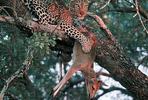
Leopard and Prey
In Kruger the leopard's most consistent prey is the impala. Kruger mammal writer Heike Schutze believes that leopards prefer bushbuck, reedbuck and waterbuck over impala. It's no coincidence that these are the buck that occupy the same riverine bush habitat as the leopard does.
