
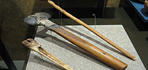
Late Stone Age


Using clues left behind over the millennia, we can trace our history in southern Africa from the very beginnings of human development, some 2.5 million years ago, to the present.

The Stone Age spans a lengthy period - from about 2 million years ago, to 1 800 years ago, and gets its name from the use made of simple stone tools. Divisions into early, middle and late Stone Age exist, according to the complexity of the tools used.

During the Later Stone Age, from about 40,000 years ago, a wide range of bone and wooden tools was increasingly in use and plants were used for making rope, string, nets, mats, etc. Personal ornamentation, such as beads and pendants made of ostrich eggshell, shells, ivory, wood and bone were common.

This period was characterised by the habitation of the area by the San. South Africa, and specifically the Kruger National Park, has one of the best-preserved and largest concentrations of San Rock Art in Africa, which date from about 27 000 years ago to as recently as 100 years ago.

Ochre and other mineral pigments were used for body painting as well as for painting on rock. Bows and arrows were used for the first time during the Later Stone Age, possibly from about 10,000 years ago.

Formal burial was practised and the symbolism and spiritual thought now understood to have been behind the rock art is clear evidence that intellectual capabilities similar to ours had already developed by the Late Stone Age.


Reference Guide Navigation
You are currently on page number 2
[prev]  [1] [2]  [next]

 
Kruger National Park: South Africa Safari
Siyabona Africa: Your Informed African Travel Partner

Siyabona Africa (Pty)Ltd - The Definitive Kruger Park Guide
Kruger Park Reservations and Bookings