
Gerrie Camacho of the Mpumalanga Parks Board is still watching his camera traps, hoping for a sighting of the elusive black leopard. Gerrie Camacho of the Mpumalanga Parks Board is still watching his camera traps, hoping for a sighting of the elusive black leopard. The black leopard is often said to be a myth, but Camacho says that enough reported sightings have been recorded to believe the animal truly exists out there in its own hidden corner of the wild.
Leopards are naturally elusive, and the black leopard makes up a mere 1% of the entire leopard population, leaving this magnificent predator unseen in the wild. Sightings in the highlands of Mpumalanga have been more common than anywhere else in the world, although many reported sightings can only be confirmed orally.
The expert zoological researcher on lions and leopards said that a reported amount of 30 sightings had been recorded between 1952 and 2013.Camacho's camera traps have photographed animals in an area of about 60-80,000ha, spotting five male leopards, six females and two cubs. Three of these 13 animals have only been photographed on one side, and so could be the same individual. 12 other carnivores including brown hyena, honey badger, serval and side-striped jackal have been snapped by the motion-detecting cameras. Four primate species, nine antelope species, birds, bats, Cape hare and rock rabbits have all been identified from the thousands of photos. Camacho says, "We are picking up excellent results including plenty of new distribution records of species; we seem to detect a trend where a strong correlation seems to exist between the presence and absence of certain predator rivals in certain areas.
He adds, "There is no definite correlation between cattle presence and leopard activities" and warns that, "The perceived idea of a leopard's ability to survive in and tolerate most types of habitat and wide distribution is a myth"."There are strong indications that this behaviour is more complicated and the 'typical leopard habitat' is wrongly perceived, maybe because of the persecution of the animal," he said. Almost 20 years ago a female leopard caught in the wild in Mpumalanga gave birth to one normal and two black cubs at Tompi Seleka College.
Another of her offspring has ended up in the Hartebeespoort Zoo, while a black individual was sold to Mabula. Camacho intends to continue the camera trap project over most of Mpumalanga, continuing for as long as possible. "There are too many unanswered questions".
https://showme.co.za/nelspruit/news/chasing-mpumalangas-black-leopard/
Leopards are naturally elusive, and the black leopard makes up a mere 1% of the entire leopard population, leaving this magnificent predator unseen in the wild. Sightings in the highlands of Mpumalanga have been more common than anywhere else in the world, although many reported sightings can only be confirmed orally.
The expert zoological researcher on lions and leopards said that a reported amount of 30 sightings had been recorded between 1952 and 2013.Camacho's camera traps have photographed animals in an area of about 60-80,000ha, spotting five male leopards, six females and two cubs. Three of these 13 animals have only been photographed on one side, and so could be the same individual. 12 other carnivores including brown hyena, honey badger, serval and side-striped jackal have been snapped by the motion-detecting cameras.
He adds, "There is no definite correlation between cattle presence and leopard activities" and warns that, "The perceived idea of a leopard's ability to survive in and tolerate most types of habitat and wide distribution is a myth"."There are strong indications that this behaviour is more complicated and the 'typical leopard habitat' is wrongly perceived, maybe because of the persecution of the animal," he said. Almost 20 years ago a female leopard caught in the wild in Mpumalanga gave birth to one normal and two black cubs at Tompi Seleka College.
Another of her offspring has ended up in the Hartebeespoort Zoo, while a black individual was sold to Mabula. Camacho intends to continue the camera trap project over most of Mpumalanga, continuing for as long as possible. "There are too many unanswered questions".
References
Show Me, Nelspruithttps://showme.co.za/nelspruit/news/chasing-mpumalangas-black-leopard/
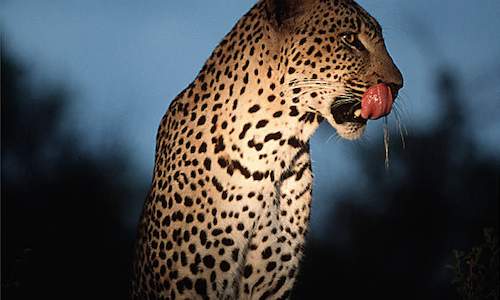 Leopards are the least social – and perhaps the most beautiful – of the African big cats. What Do Leopards Eat?...
©2024 Siyabona Africa(Pty)Ltd - Booking Kruger National Park
Booking Safari Tour Packages
Booking Rest Camp
Booking Luxury Accommodation
